

Podcast Recording
Podcast listeners have zero tolerance for bad audio. Background hum, room echo, uneven levels between hosts, mouth noise. Any of it and they skip to the next show. GoatHead Audio provides professional podcast recording with proper mics, clean gain, and controlled acoustics.
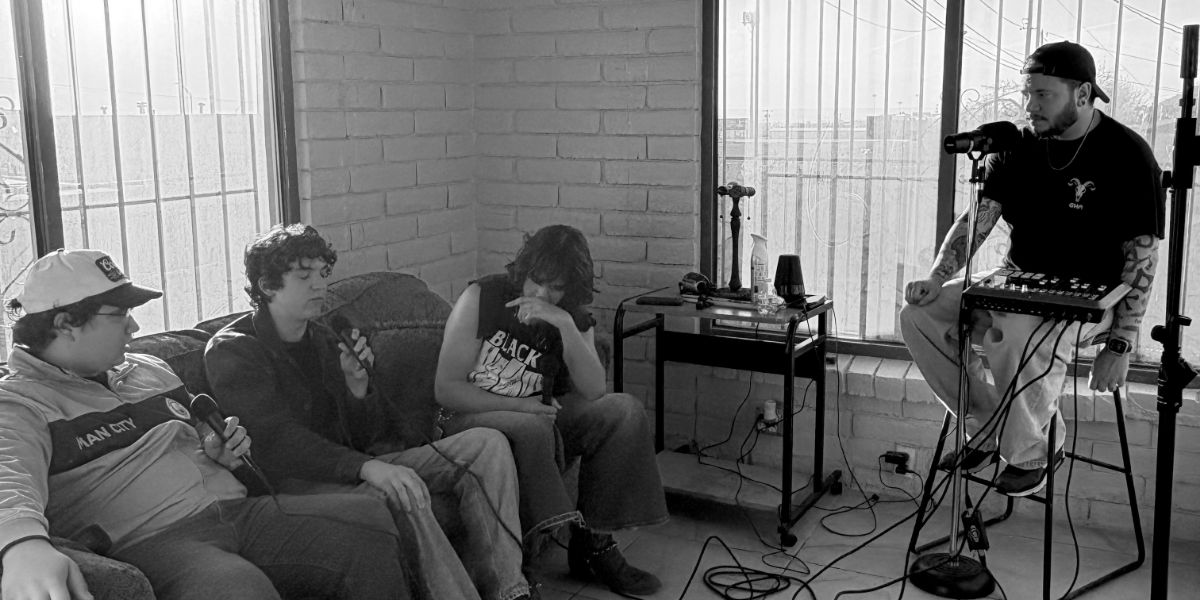
What We Bring
Dynamic or condenser microphones depending on your space. Pop filters for plosive control. Individual channels for every host on our multi-channel interface. Headphone monitoring so hosts can hear themselves and each other clearly.
For remote guests joining via Zoom or similar, we can record a backup track on our end while capturing the in-room hosts on dedicated channels.
Deliverables
Stems: Individual tracks per host ($50/episode). Great if you edit your own podcast.
Mixdown: Balanced stereo file with levels matched between hosts ($100/episode). Ready to upload to your hosting platform.
We can also provide recurring session scheduling if you record weekly or bi-weekly.
Treating the Room and Controlling Noise
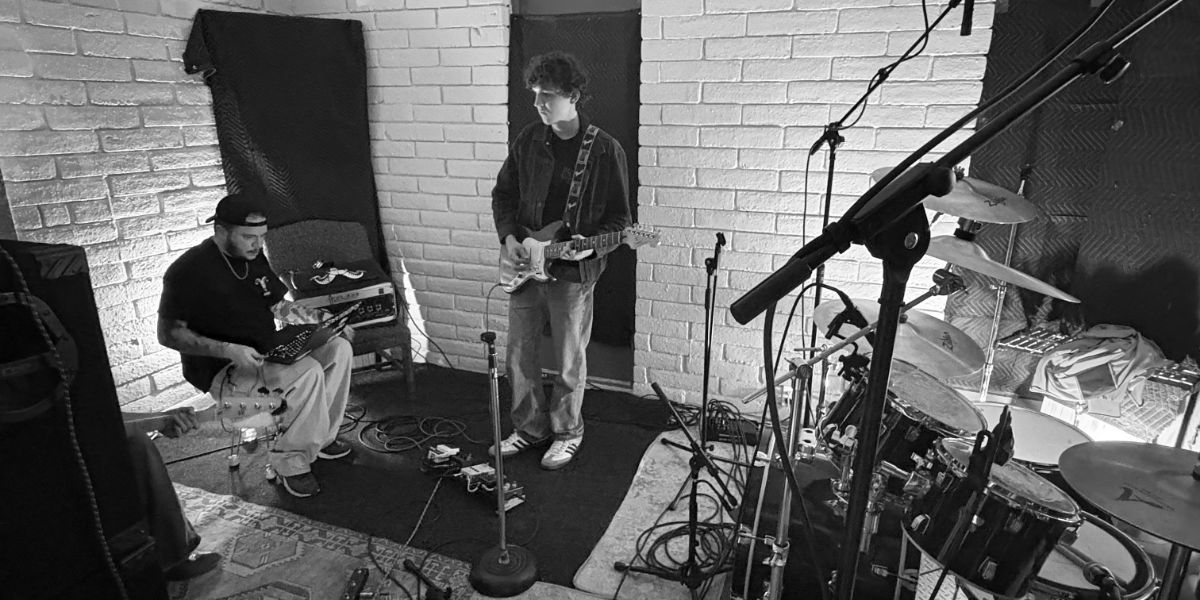
Most bad podcast audio is a room problem, not a mic problem. Hard walls, bare floors, and high ceilings create echo that makes voices sound distant and amateur. Before we record, we treat the space with what is on hand, soft furniture, rugs, blankets on stands, and pick the spot with the least reflection. Dynamic mics like the SM7B help too, since they reject far more room sound than condensers.
We also hunt noise at the source: HVAC, a refrigerator hum, a buzzing light, a laptop fan. Thirty seconds spent fixing the room beats hours trying to clean it up afterward.
Mic Technique for Hosts and Guests
Each host gets their own mic on their own channel, positioned about a fist's distance away and slightly off-axis to control plosives and breath. Isolated channels let us fix one loud talker or edit out a cough without touching anyone else, and we set gain per voice, since a soft-spoken guest and a booming host need different levels.
For remote guests on Zoom or similar, we record the in-room hosts on dedicated channels and capture a backup of the remote feed on our end, so a dropped call or a guest's poor microphone does not sink the whole episode.