

Guitar Recording
Guitar is one of the most versatile instruments to record and there's no single right way to do it. An SM57 on a cranked amp. A condenser a foot off the body of an acoustic. A direct input for clean electric tones. Sometimes all three at once.
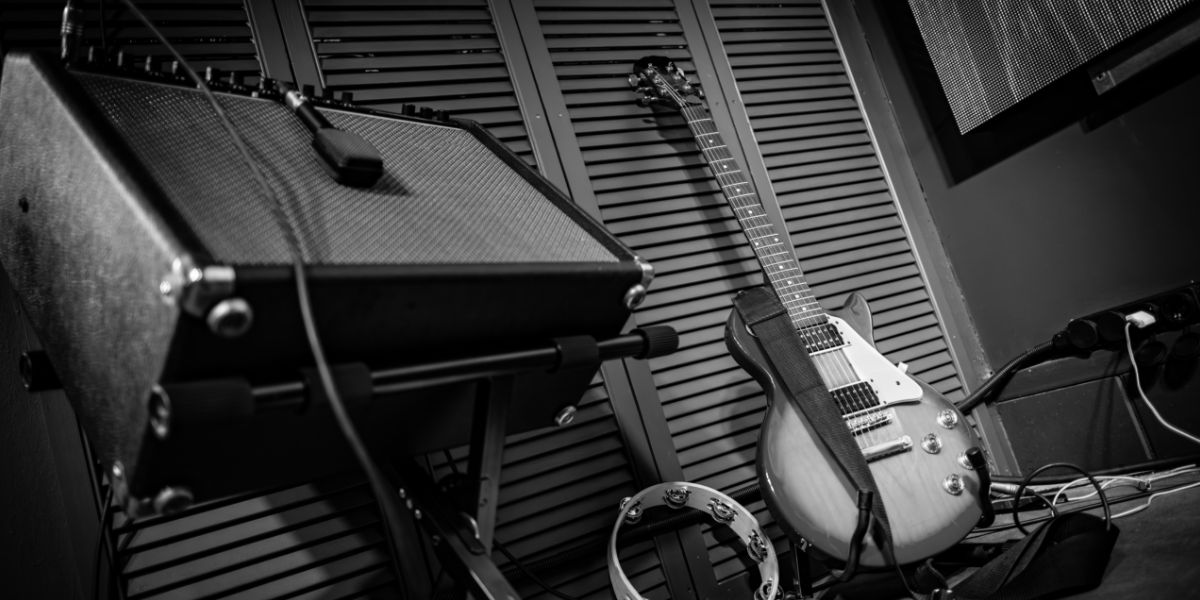
Electric Guitar
For electric guitar, we typically mic the amp with an SM57 close to the speaker cone. We can add a second mic farther back for room sound or a different angle. If you use pedals, bring your full pedalboard. We record the signal as it comes out of your amp.
DI recording through the Line 6 Pod Go is also available for re-amping flexibility or for situations where amp volume is an issue.
Acoustic Guitar
Acoustic guitar gets a condenser mic positioned to capture the body resonance and string detail. Placement varies by guitar and room. We test positions before committing. For singer-songwriters, we use separate mics for voice and guitar to maintain mixing control.
Finger noise, pick attack, and body resonance all come through on a well-placed condenser. That's the point. Acoustic recordings should sound natural and detailed.
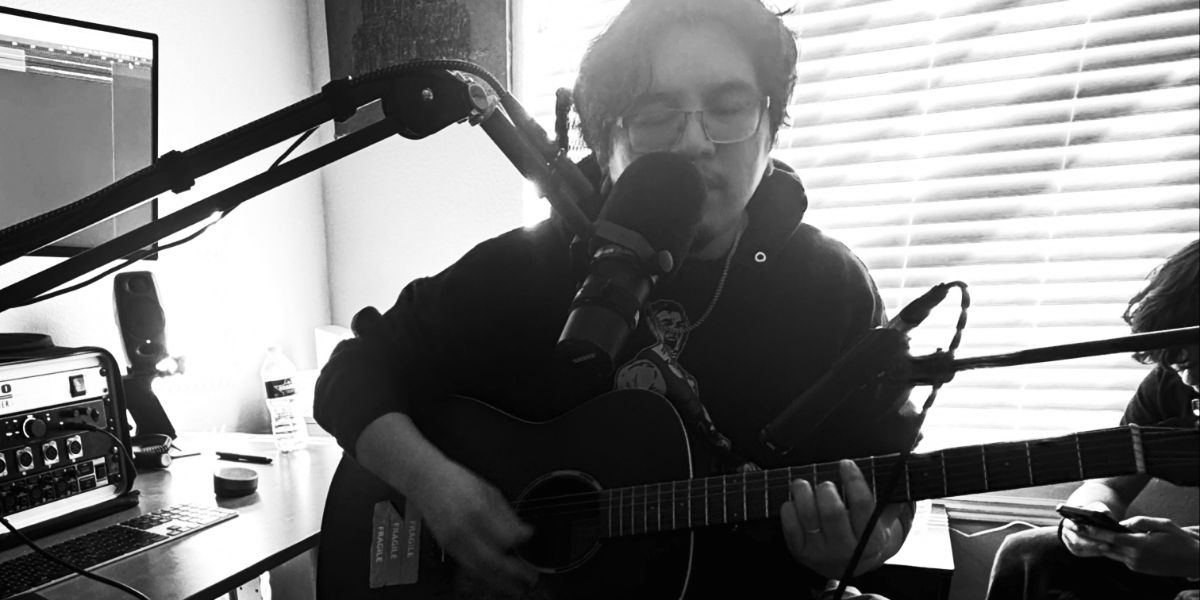
Layering for a Bigger Guitar Sound
A wall of guitar usually is not one track turned up; it is two performances panned apart. We track the same rhythm part twice and pan them left and right, and the small human differences between the takes create width a single track cannot. Doubling with a different guitar, amp, or pickup widens it further.
We keep rhythm, lead, and any textures on their own channels so the mix can place each where it belongs. Knowing the arrangement ahead of time, what should be wide and what should sit center, helps us track parts that actually fit together.
DI and Re-amping
Recording a clean direct signal alongside the miked amp keeps options open. Through the Line 6 Pod Go we capture a DI track at the same time as the amp, so if a tone needs to change in the mix we can re-amp the clean signal instead of re-recording the part. It also rescues sessions where amp volume is a problem in the space.
For bass we usually combine a DI with a miked cab: the DI delivers tight low end and definition while the cab adds character. Blending the two gives a bass that is both felt and heard.